
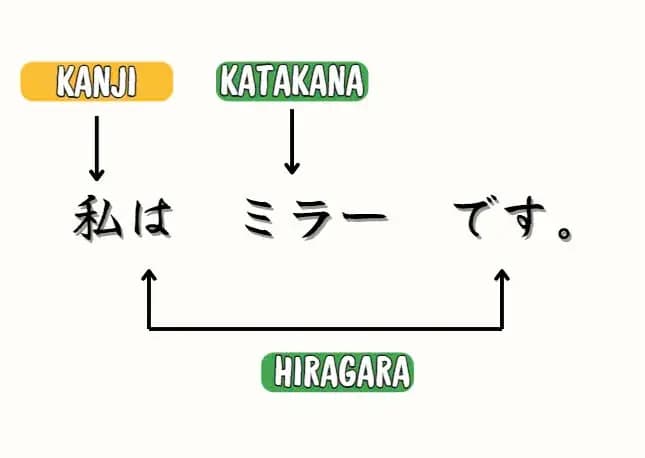
The Japanese Alphabet is made up of three essential types of characters: Hiragana, Katakana, and Kanji. Each of these character sets plays a unique and important role in the language, helping to form the foundation of the Japanese Alphabet writing system.
Hiragana and Katakana are both phonetic scripts, used for different purposes. Hiragana is used for native words and grammar, while Katakana is used for foreign words and names.
Kanji, on the other hand, consists of characters borrowed from Chinese and represents entire concepts or ideas, adding depth and richness to the language.
Together, these three types of characters create a writing system that allows for a highly nuanced and flexible way to communicate, combining simplicity with complexity in a way that reflects the beauty and precision of the Japanese Alphabet.
Let's learn Hiragana
Hiragana is the core phonetic script in the Japanese Alphabet, with 46 base characters that represent syllables, unlike English letters that represent single sounds. Each character corresponds to a specific sound, making Hiragana essential for native Japanese words, grammar particles, and verb conjugations.
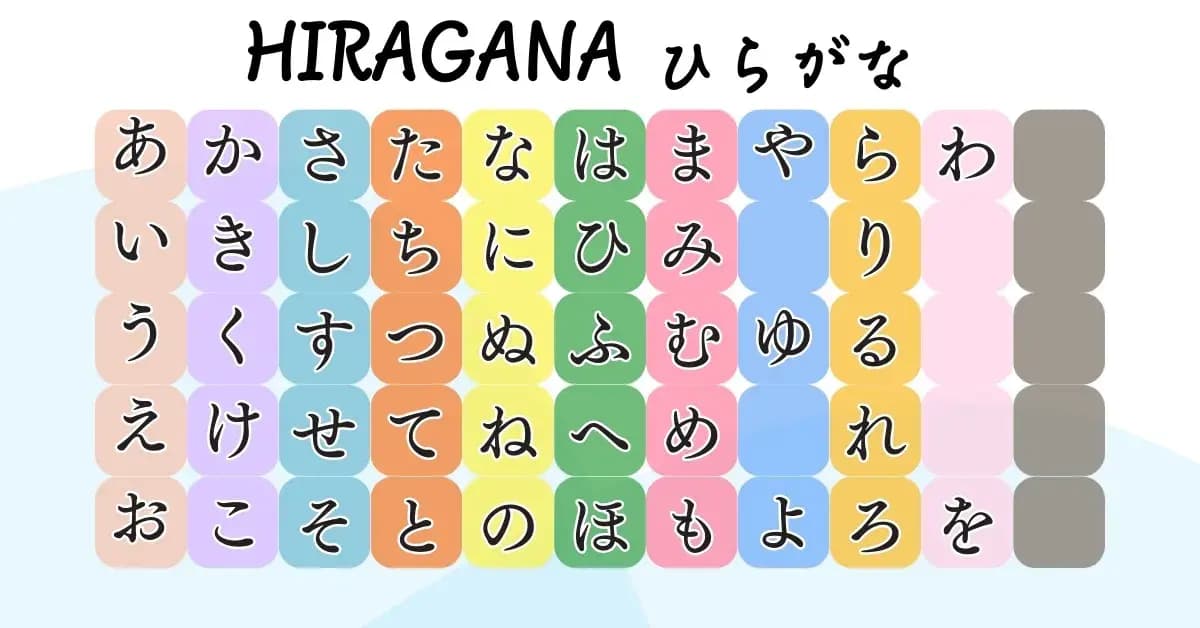
Hiragana is the first script beginners learn in the Japanese Alphabet because it represents the basic sounds of the language. It is essential for reading, writing, and understanding grammar, as it is used for native vocabulary and verbs.
Mastering Hiragana helps learners with pronunciation and forms the foundation for more complex writing systems like Kanji and Katakana. Hiragana also clarifies pronunciation in Kanji, making it easier to read and understand texts. In short, learning Hiragana is crucial for building a solid base in Japanese and progressing in language skills.
Let's learn Katakana
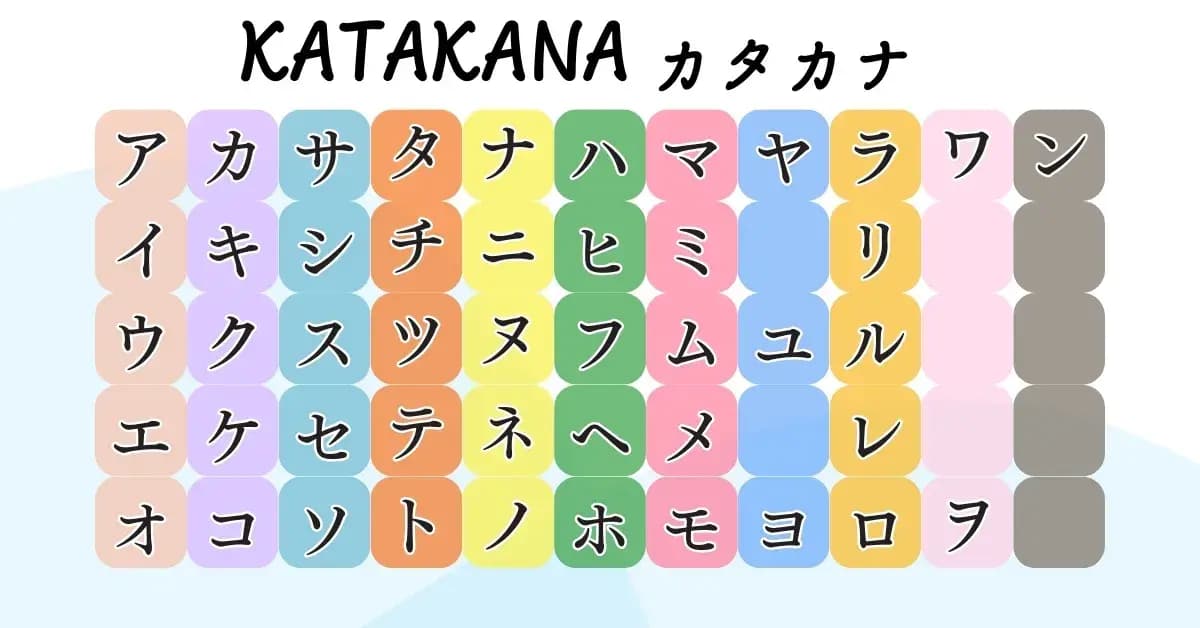
Katakana is also a phonetic script in the Japanese Alphabet, but it has a different purpose. It's mainly used for foreign words, names, and emphasis. While Hiragana is more common in everyday writing, Katakana helps set apart words borrowed from other languages, making them easier to recognize.
For example, when you see words like "computer" (コンピュータ), "coffee" (コーヒー), or the names of foreign countries, these words are written in Katakana to distinguish them from the rest of the Japanese vocabulary.
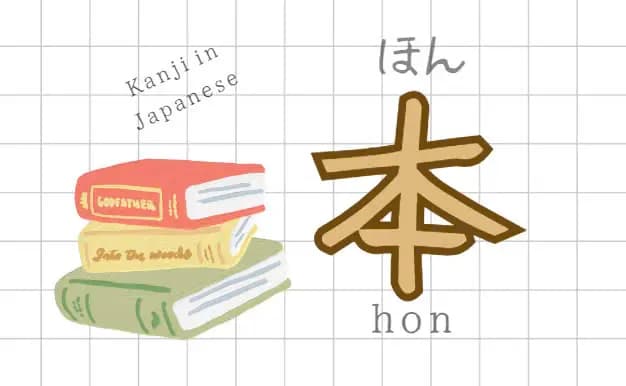
Kanji is often considered the most challenging aspect of the Japanese Alphabet. Unlike Hiragana and Katakana, which are phonetic scripts, Kanji represents entire concepts and ideas. Each character can have multiple readings and meanings, making it more complex to learn.
For example, the Kanji 生 can mean "life", "birth" or "student" depending on the context, and it can be read as "sei" "shou" or "i" in different words. The Kanji 本 can mean "book" and it can be read as "hon". Kanji is an integral part of the Japanese Alphabet, enabling a deeper understanding of vocabulary and expression.
In addition to these general uses, Kanji also plays a key role in the Japanese Alphabet's number system. For example, 一 represents the number "one" 十 means "ten" and 百 means "hundred". Larger numbers like 千 (thousand) and 万 (ten thousand) also use Kanji. Kanji characters are integral to expressing numbers in Japanese, particularly in formal writing or traditional contexts.
Mastering Kanji requires memorizing both the meaning and pronunciation of each character, which is hard for beginners. But, knowing Kanji allows for deeper understanding and more nuanced expression, meaning of vocabulary in Japanese, unlocking the mastering of the Japanese language. Therefore, instead of learning Kanji as a complete writing system like Hiragana and Katakana, it is easier to study Kanji through vocabulary.
Besides Hiragana, Katakana, and Kanji, Japanese also uses Romaji. Romaji is not a Japanese alphabet; it uses the Latin alphabet to show Japanese pronunciation. Because the letters are familiar, Romaji helps beginners feel more comfortable when they first start learning Japanese.
Romaji is often seen in beginner textbooks, learning apps, and signs. It allows learners to read words without memorizing Japanese characters right away. For example, the word まんが is written as manga in Romaji.
However, Romaji should only be used as a support tool. Relying on it too much can make learning Japanese writing systems harder later. As learners progress, they should focus more on Hiragana, Katakana, and Kanji to read Japanese naturally.